
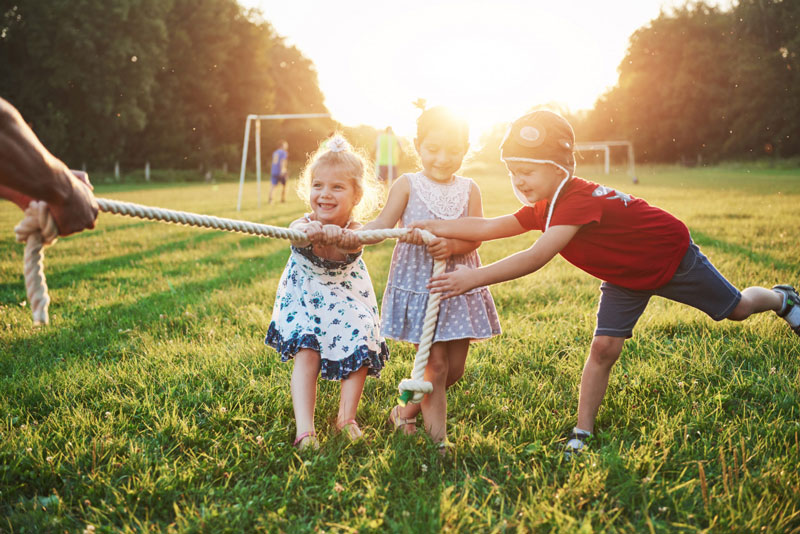
In today’s fast-paced, screen-heavy world, many children are experiencing overstimulation, reduced attention spans, and difficulty regulating energy and emotions. While technology has its place, one of the most powerful and evidence-backed tools for supporting a child’s wellbeing is surprisingly simple: nature play.
For preschool-aged children, time spent outdoors is not just “burning energy.” It is a fundamental driver of emotional regulation, behavioural balance, confidence, and healthy development. At Linky Littlies, we see firsthand how regular access to outdoor environments through social outings and early learning programs transforms children’s behaviour, focus, and emotional resilience.
What Is Nature Play?
Nature play refers to unstructured, child-led activity in natural outdoor environments. This includes:
- Grass, sand, dirt, and mud play
- Climbing trees or playground equipment
- Water play
- Nature walks
- Gardening
- Exploring rocks, leaves, sticks, and insects
Unlike structured indoor activities, nature play allows children to:
- Move freely
- Take risks safely
- Problem-solve independently
- Engage all five senses
- Self-regulate their energy organically
This is where real development happens.
How Nature Helps Children Regulate Energy
Many children struggle with what parents often describe as being “too hyper,” “constantly restless,” or “unable to settle.” In most cases, this is not bad behaviour — it’s unmet sensory and movement needs.
Nature provides:
- Large, open movement space
- Physical resistance (climbing, digging, lifting)
- Visual calm
- Rhythmic movement
- Deep sensory input
This naturally balances a child’s nervous system.
According to the Raising Children Network Australia, regular outdoor play improves:
- Sleep quality
- Attention span
- Impulse control
- Physical coordination
- Emotional regulation
Children who move their bodies in natural environments are calmer, more focused, and better able to manage big emotions.
The Emotional Regulation Benefits of Outdoor Play
Emotional regulation is the ability to recognise and understand emotions, process feelings in a healthy way, respond appropriately to different situations, and self-soothe when feeling overwhelmed. This foundational life skill supports children in managing stress, building resilience, and developing strong social relationships, all of which are significantly strengthened through regular outdoor play experiences. Nature supports this process in powerful ways.
When children engage in outdoor play, their bodies and minds respond in powerful ways. Studies show that time spent outdoors is linked to lower cortisol levels, the hormone responsible for stress, as well as reduced anxiety and improved overall mood. Children also develop greater frustration tolerance as they navigate challenges in play, which in turn strengthens emotional resilience the ability to cope with setbacks, regulate emotions, and bounce back with confidence.
Research supported by the World Health Organization indicates that regular exposure to green outdoor environments significantly improves mental health outcomes for children, including reduced symptoms of anxiety and emotional dysregulation.
In simple terms: nature calms the brain.
Why Nature Builds Confidence and Independence
Nature play introduces healthy, age-appropriate risk in a safe way. This could be:
- Climbing a small height
- Balancing on uneven ground
- Navigating space independently
- Problem-solving physical challenges
Each success tells a child:
“I can do this.”
“I can trust my body.”
“I can try again.”
This builds:
- Self-confidence
- Risk awareness
- Decision-making skills
- Body confidence
- Emotional bravery
Children who develop confidence through physical environments often show stronger emotional confidence in social settings as well.
Nature Play and Behaviour in Early Learning
Early learning educators consistently report that children who engage in regular outdoor play demonstrate:
Better listening skills
Lower aggression
Improved cooperation
Less emotional outbursts
Greater classroom focus
Outdoor play is not a break from learning. It prepares the brain for learning by regulating the nervous system before children transition into structured tasks.
This is why nature-based excursions and outdoor routines are becoming a core part of modern early childhood education.
Reducing Screen Reliance Through Nature
Many families struggle with:
- High screen dependence
- Meltdowns when screens are removed
- Sleep disruption
- Sensory overload
Nature play provides a powerful alternative to screen time. When children experience freedom of movement, rich sensory stimulation, meaningful peer interaction outdoors, and the space for unstructured exploration, their dependence on screens naturally reduces not through restriction, but through replacement with something far more fulfilling. This shift supports healthier attention spans, stronger emotional development, and deeper engagement with the real world.
The Social Benefits of Nature Play
Nature play supports more than just emotional regulation. It also strengthens:
- Peer connection
- Communication
- Teamwork
- Problem-solving
- Leadership skills
When children play outside together, they:
- Collaborate
- Negotiate rules
- Take turns
- Resolve disagreements
- Develop empathy
This dual impact — emotional regulation and social development — makes nature play one of the most powerful tools in early childhood.
Why Access to Nature Matters for Every Family
Not every family has:
- A backyard
- Local green spaces
- Time for daily outdoor outings
- Flexible schedules
- Safe walking access
This creates unequal access to one of the most essential developmental tools available to children. This is where education-based outings and supported transport become critical. By ensuring children can safely access outdoor environments through their early learning programs, we remove one of the biggest barriers to healthy development.
The Role of Transport in Supporting Nature-Based Experiences
For many working families, participation in outdoor learning and nature-based outings depends entirely on reliable transport.
Child transport services support:
- Consistent attendance
- On-time participation
- Reduced daily stress
- Access to excursions
- Continuity of routines
When children arrive consistently at early learning programs, they don’t miss out on:
- Outdoor play sessions
- Excursions
- Nature walks
- Community engagement
Consistency is what allows the real benefits of nature play to compound.
How Linky Littlies Supports Outdoor Learning and Wellbeing
At Linky Littlies, our role goes far beyond transport. We help ensure children can reliably participate in:
- Nature-based preschool programs
- Outdoor excursions
- Community outings
- Early learning routines
- Social and environmental exploration
By removing transport barriers, we help families unlock critical emotional and behavioural benefits for their children — including stronger emotional regulation, improved behaviour, and noticeably reduced stress at home. When access to nature-based play becomes easy and reliable, the ripple effect extends beyond the child to the entire household, creating calmer routines, better communication, and more balanced family dynamics. Stronger social development and more balanced healthier daily rhythms. Every safe journey gives children access to the environments where they grow best.
The Long-Term Impact of Nature on Emotional Health
Children who regularly engage in nature play are more likely to grow into adolescents and adults who demonstrate:
- Lower anxiety levels
- Stronger coping skills
- Better stress management
- Improved emotional self-awareness
- Greater mental resilience
According to long-term studies referenced through the Australian Institute of Family Studies, early exposure to outdoor environments plays a protective role against emotional and behavioural challenges later in life.
Nature doesn’t just support childhood — it strengthens life.
Final Thoughts for Parents
Nature is not a luxury for children. It is a biological and emotional necessity.
Through regular outdoor play, children learn to:
- Regulate energy
- Calm big emotions
- Build confidence
- Strengthen friendships
- Improve focus
- Develop emotional resilience
When children are given safe access and consistent exposure to nature, their behaviour, wellbeing, and confidence often transform in powerful ways.
If your family is seeking safe, reliable child transport that supports outdoor learning, nature-based outings, and early childhood development, Linky Littlies is here to support your journey.
Enquire today and help your child grow with balance, confidence, and emotional strength.